A Glimpse of A Tree Through the Four Seasons
words by Pauline Tsui, art by Ananya Sairaman
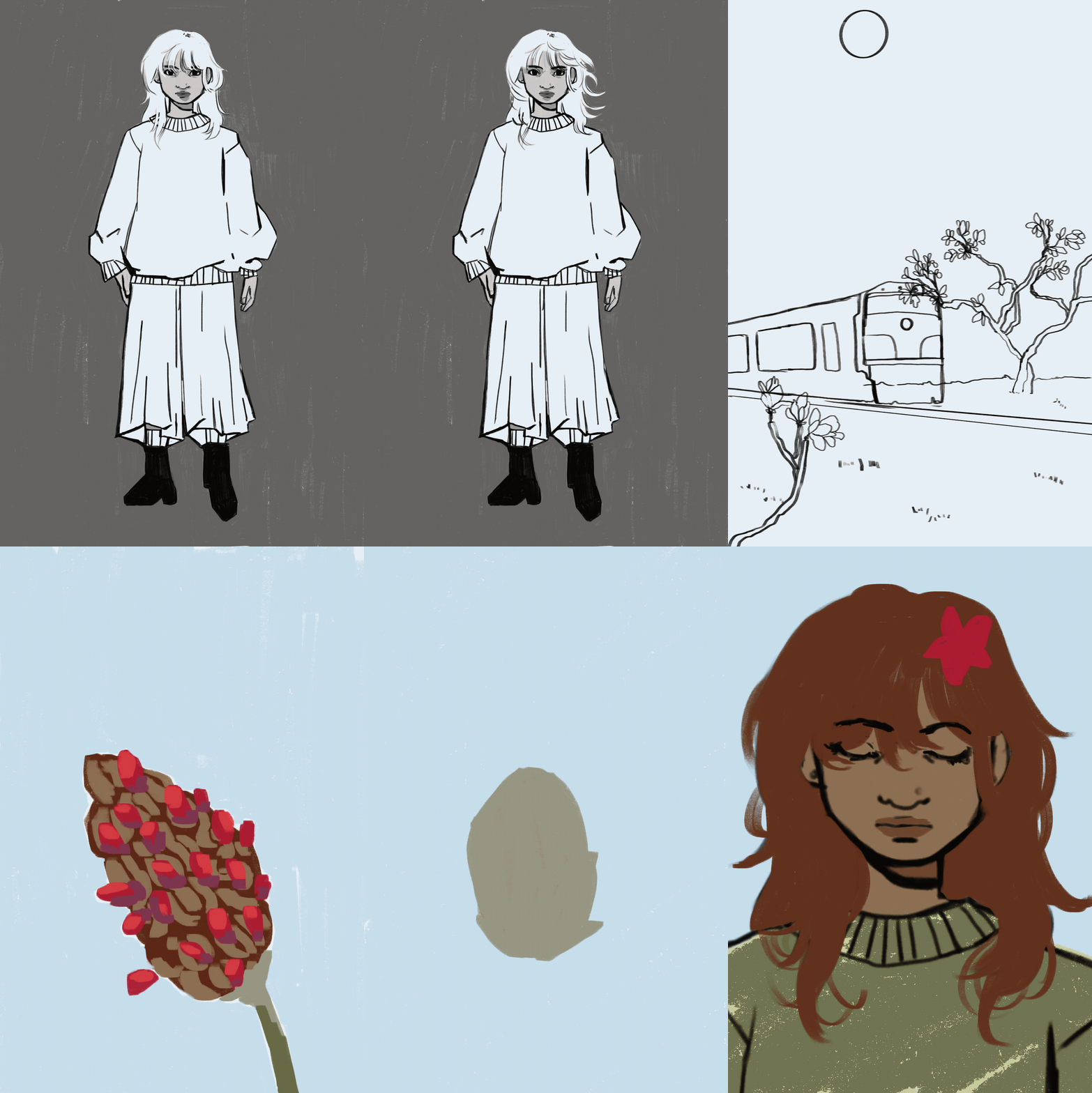
Spring
Before I knew the word for survival, I knew the scent of new rain. My family name—Tsui, pronounced “tree”—rooted me in a soil older than I could imagine.
My grandparents farmed in the southern hills of China and Hong Kong, their hands carved by harvest and hunger. They built their lives on stubborn earth and silence, the kind that clings to the ribs. When my grandfather was a boy, he rose before dawn to fetch water that reflected mountains my father would someday leave behind.
When my father came to America, he carried these mountains in his suitcase, his home wrapped in tissue, a reminder of where he began. My mother and my grandmother followed years later, younger and restless, carrying their own ghosts and a hunger for something gentler. They planted themselves in a foreign city, learning to speak through half-remembered words and gestures.
I was their spring—the tender shoot that promised a new start.
In those early years, I remember my mother humming Mandarin lullabies while stirring soup; my father bringing home takeout that smelled faintly of sesame and fatigue. They believed their sacrifices would bloom through me.
Back then, I thought our family Tsui was still young, green, pliant, ready for endless renewal. I didn’t yet know that even in spring, the roots already remember the frost.
Summer
The heat came slowly, then all at once.
Storms gathered in the corners of our home—hardships from overseas swelling up in my mother’s voice, rising like thunder; my father’s silence thick as humidity before rain. Pots clashed against the sink, doors slammed like breaking branches. I learned to measure the weather of our house the way sailors read the seam, counting the seconds between footsteps and tempests.
When my mother’s heart faltered and she was hospitalized, the world stilled. I was eleven. My father’s callused hands grew weary, and the responsibility to keep us steady slid quietly into mine. The language of adulthood came faster than childhood could fade.
Each form I filled out for my parents felt like grafting myself onto their struggle. English became both bridge and bark, protective but constraining, words that held and confined. I translated not just language, but my family’s history: school notices, bank letters, doctor’s warnings. Each sentence was a root burrowing deeper into unfamiliar soil.
My mother’s tempests came from older climates, years of poverty hardened into defense. “Nǐ tài xiá'ài hé zìsīliǎo,” she’d yell, her words scorching my branches. “You're so close-minded and selfish.”
My father, retreating into television light, became the quiet horizon against which every storm broke. Still, I grew. My branches reached for the sun, even when the soil was cracked and dry.
Autumn
Autumn taught me to see the symmetry of pain and love, and to grow despite it. I learned that trauma travels quietly through generations, disguised as protection. My mother’s storms came from the same roots as her mother’s; my father’s silence from the same soil as his father’s.
As the air cooled and the light thinned, I studied with the quiet resolve of a tree deepening its roots before winter. My mother’s trembling hands, my father’s long drives home—these were the winds that shaped me, reminders of how our family had bent and clung onto the quiet contract of survival and hope. From their hardships, I sought to grow something steady: a trunk that could hold through the frost. Each late night over textbooks and research was another ring forming in my bark—a slow promise that the ground beneath us could one day feel firm again.
Autumn was when I began to reshape the soil my family had weathered for years. Their roots, though fractured and worn, had held me all along. The hardships that trickled down my trunk left their marks, but I do not seek to forgive—only to understand. And from that understanding, I grow.
Winter
The storms never stop; a Tsui simply stands strong within them.
Even as I reached upward, my family’s roots tugged beneath me—threads of history and hunger frozen deep in the Earth. I can only glimpse into my parents’ winters: their first nights in America, wrapped in donated coats, holes in their socks, sleeping under the hum of borrowed heat. Their voices crossed oceans through static and longing, the distance between them measured in both miles and silence.
Those fragments—half-told between errands and exhaustion—settled in me like rings beneath bark, each one a quiet record of endurance.
Now, when the wind presses cold fingers against my window, I listen. I hear the ache beneath the thunder, the survival humming underneath. The tree no longer trembles; it listens.
Spring Again
Every year, a tree adds another ring. Cut through the trunk, and you won’t find symmetry—you’ll find story: droughts, floods, seasons of abundance and loss. Each ring is a record of struggle turned into structure.
I carry that inside me. The interpreter, the daughter, the student, the witness. My parents’ sacrifices ripple through me still: the way I pause before spending, the way I over-prepare for everything, the way I chase stability like sunlight through thick leaves.
But there is beauty here, too. I speak both languages now—not just English and Mandarin, but the language of endurance and tenderness, the dialect of resilience passed from generation to generation.
Sometimes I imagine the next season and our ever-growing tree. Maybe future generations will know our stories not as burdens. Rather, roots that keep them steady.
The name Tsui, “tree,” still feels like a promise: growth is not the absence of hardship, but the decision to keep reaching anyway.
I am my family’s tree.
And though my roots run deep, my branches reach wide, stretching toward their own light.
As each year circles back, I feel the hum of life beneath the bark, the pulse of all those who came before me.
Their storms live in me, but so does their sunlight.
And with every ring I earn, I remember: even after the longest winter, the branches still bloom.
